Property operations
What organization administrators can do in Sicket
Learn how Sicket organization administrators manage plans, buildings, users, permissions, communication workflows, settings, and portfolio-wide oversight.

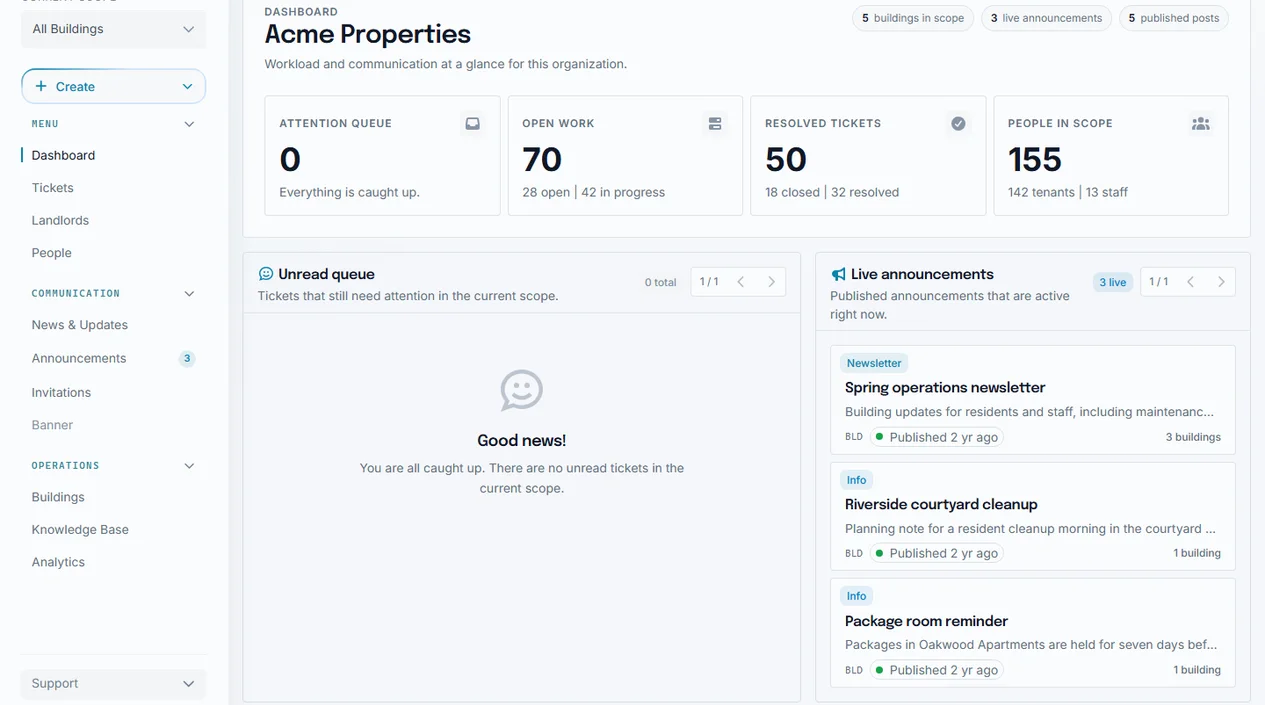
The organization administrator is the account responsible for setting up and governing a Sicket organization. It combines portfolio-wide operational access with plan, billing, user, and organization settings.
This role is appropriate for an owner, internal administrator, or central housing team that needs the complete organizational overview. Day-to-day building work can still be delegated to landlords without giving those users billing or unrelated-building access.
Organization setup and plan ownership
Organization administrators create the organization, choose or change the plan, and manage billing through Sicket and the Stripe customer portal where applicable. They can review current limits for buildings, tenants, landlords, Observers, storage, and Knowledge Base entries.
They also manage organization-level settings, supported security options, AI feature availability, and other configuration that should not be delegated to building staff.
Buildings, residential units, and scope
An administrator can create buildings and maintain their address, display name, accent theme, contact details, residential units, and availability. Buildings provide the main scope for tickets, residents, landlords, communications, incidents, knowledge, and analytics.
When working across a portfolio, the current scope selector is important. An administrator can review all buildings or narrow the dashboard to one building before making a change.
Inviting people and assigning access
Organization administrators can:
- invite tenants individually or in bulk;
- enable and share a building QR code for tenant self-join;
- approve or reject verified QR join requests;
- invite landlords and assign their managed buildings;
- invite other organization staff where supported;
- invite Observers and assign one or more buildings for read-only oversight;
- review people, assignments, account state, and tenant move-outs.
Landlord and Observer assignments can be changed later. Their scopes remain separate: landlords perform operational work, while Observers have privacy-limited read-only access.
Portfolio-wide operational workflows
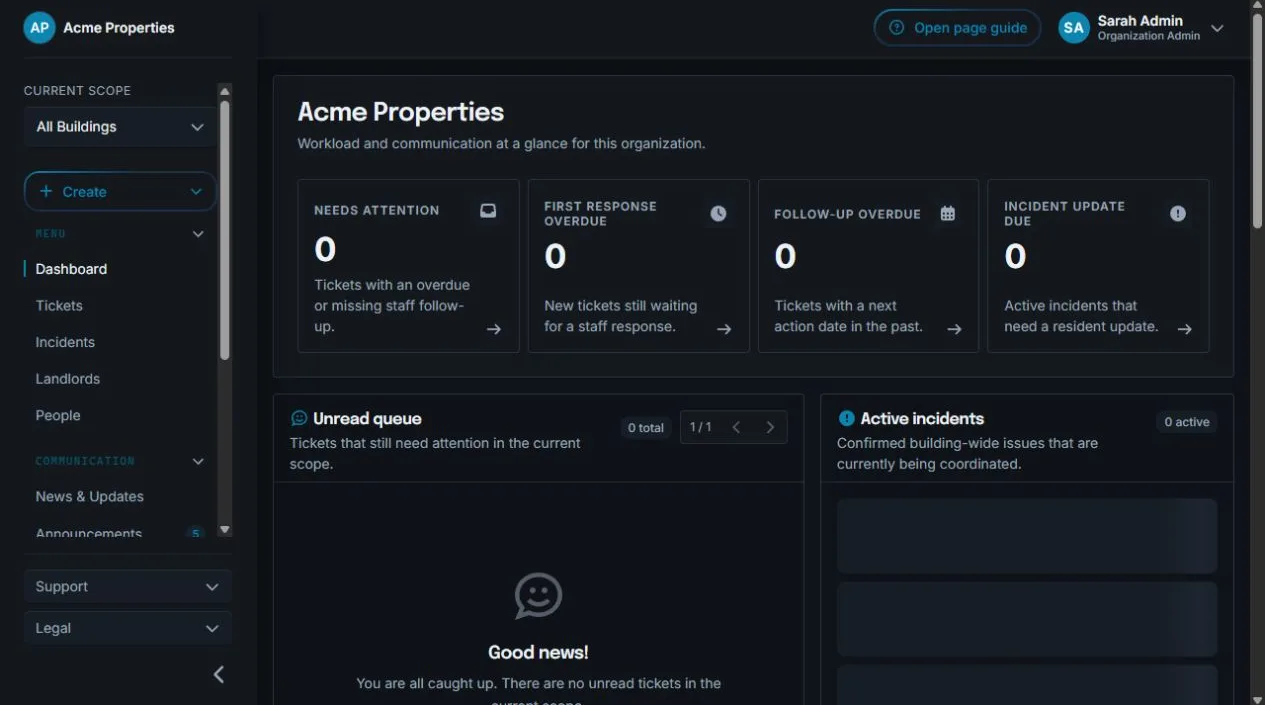
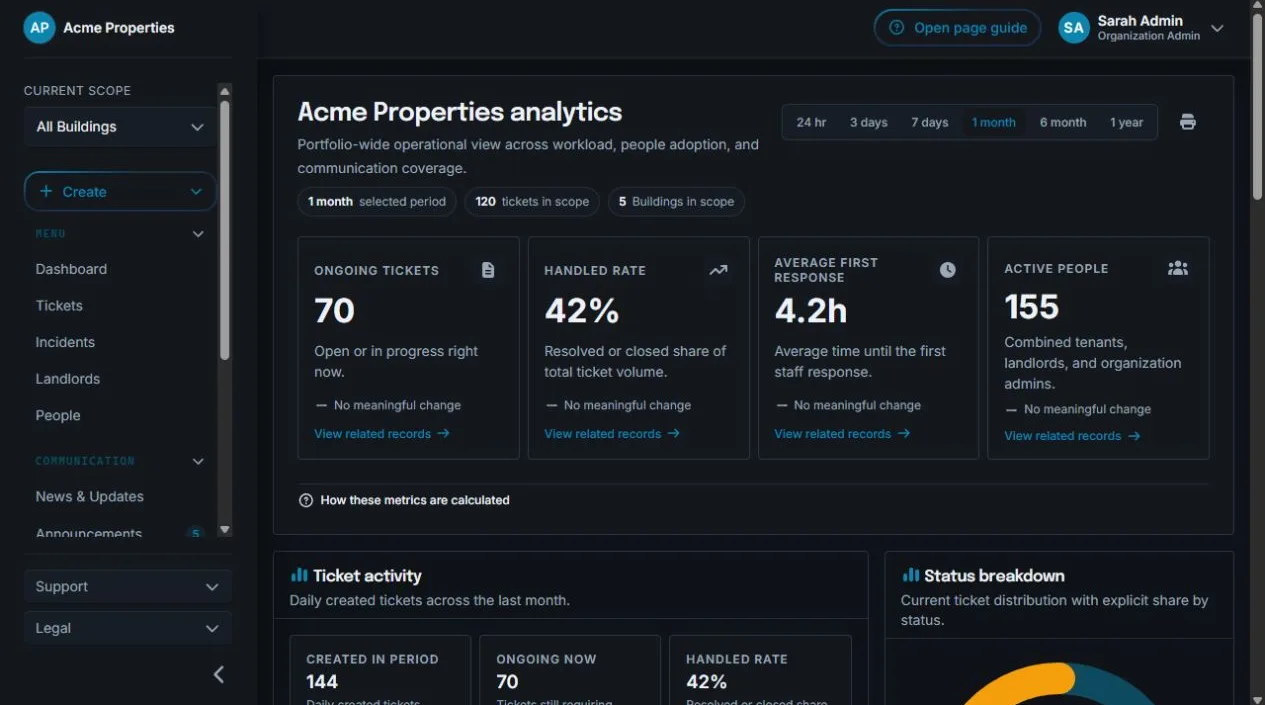
Administrators can use the same operational tools available to authorized staff, including tickets, next actions, internal notes, incidents, announcements, News & Updates, banners, Knowledge Base entries, contractor cases, and analytics.
They can also review recurring ticket patterns and decide how resident-facing communication is handled. Pattern detection does not automatically publish an incident or notify residents; staff still review the evidence and choose the next step.
Responsibilities that should stay deliberate
Broad access also means broader responsibility. Administrators should:
- Assign users only to the buildings they need.
- Verify QR join requests before granting tenant access.
- Keep residential-unit labels free of unnecessary personal information.
- Separate tenant-visible comments from internal notes.
- Review plan limits before inviting users or adding shared Knowledge Base content.
- Keep billing and organization settings limited to people who own those decisions.
The organization administrator documentation provides the current step-by-step controls. You can also read the landlord role guide, understand tenant access, or follow the first-building setup workflow.